
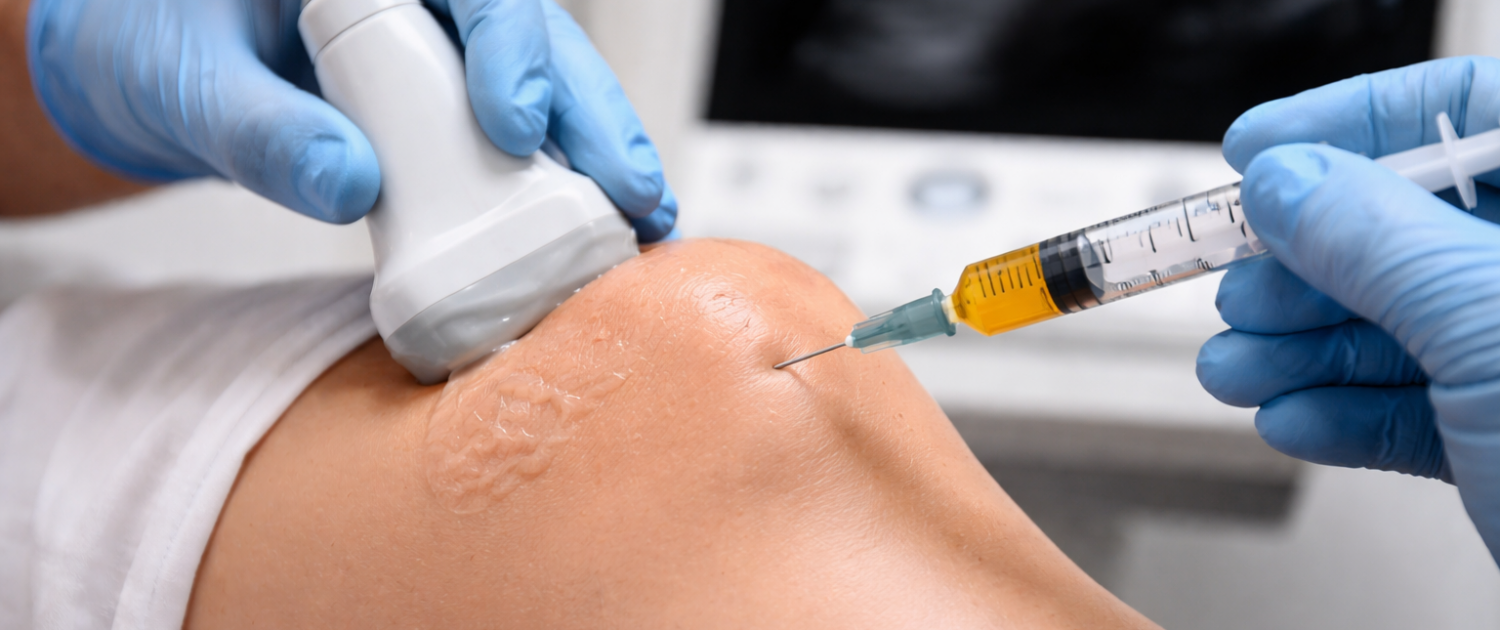
PRP Therapy for Knee Pain
Platelet-Rich Plasma (PRP) therapy may be performed using a variety of techniques and technologies including:
Standard PRP Injections
PRP is created from your own blood using a specialized centrifuge process that concentrates healing platelets and growth factors. Once prepared, the PRP is injected directly into the knee joint using a precise technique.
This method is commonly used for mild to moderate osteoarthritis, meniscus degeneration, ligament sprains, tendon injuries, and chronic knee pain. The goal is to stimulate the body’s natural healing response and reduce inflammation.
Leukocyte-Poor PRP
Leukocyte-poor PRP is a more refined preparation that removes excess white blood cells to reduce post-injection inflammation. This formulation is often preferred for intra-articular knee injections, especially in patients with osteoarthritis.
It focuses on delivering high concentrations of growth factors while minimizing irritation to the joint.
Ultrasound-Guided PRP
Ultrasound-guided PRP provides even greater precision for patients seeking non-surgical knee pain treatment.
This technology uses sound waves to produce real-time images of the knee joint, allowing the physician to guide the injection directly into the targeted area — whether inside the joint capsule or along specific tendons or ligaments.
Ultrasound guidance improves accuracy and ensures optimal placement of the PRP for best results.
PRP therapy is an excellent non-surgical option for patients experiencing chronic knee pain. This is often performed as part of an active treatment plan, which may include a series of injections spaced weeks apart depending on the severity of your condition.
As with any medical procedure, there are risks involved. These include the following:
Bruising at the injection site – Common and typically resolves within 1–2 weeks. We work to minimize this.
Temporary increase in pain or swelling – Some patients experience a flare of inflammation for several days after injection. This is part of the healing response and usually resolves quickly.
Infection – Rare but possible with any injection. Please inform us if you have diabetes or are on immunosuppressive medication.
Allergic reaction – Extremely rare since PRP comes from your own blood.
Bleeding – Slight bleeding may occur at the injection site.
Nerve or tissue irritation – Rare and typically temporary.
Blood clots – Extremely rare but possible in high-risk individuals. Please notify us immediately if you experience calf swelling, chest pain, or shortness of breath.
We use advanced centrifuge technology to process your PRP and tailor the concentration based on your condition and goals. Because PRP is derived from your own blood, it is considered very safe and natural.
We do not perform PRP injections on patients with active infections, uncontrolled bleeding disorders, or certain blood conditions. Please inform us if you are pregnant, breastfeeding, or taking blood-thinning medications.
For optimal results:
-
Avoid anti-inflammatory medications (NSAIDs) for at least 7 days before and after treatment unless directed otherwise.
-
Stay well hydrated before your appointment.
-
Follow post-procedure activity instructions carefully.
-
Avoid smoking, as it can delay healing and reduce treatment effectiveness.
PRP Treatment for Knee Pain in Kansas City & Liberty, MO
Want to learn more about your non-surgical knee pain treatment options or if PRP is right for you?
Schedule a consultation with our triple board-certified physician today by calling 816-792-3400 or use our online form and we will contact you.